

Devangi M.
Author
AI Adoption in 2026: What Businesses Should Prepare For
Understand what businesses should prepare for when adopting AI in 2026, from practical use cases and data quality to workflow integration, responsible governance, and employee readiness.
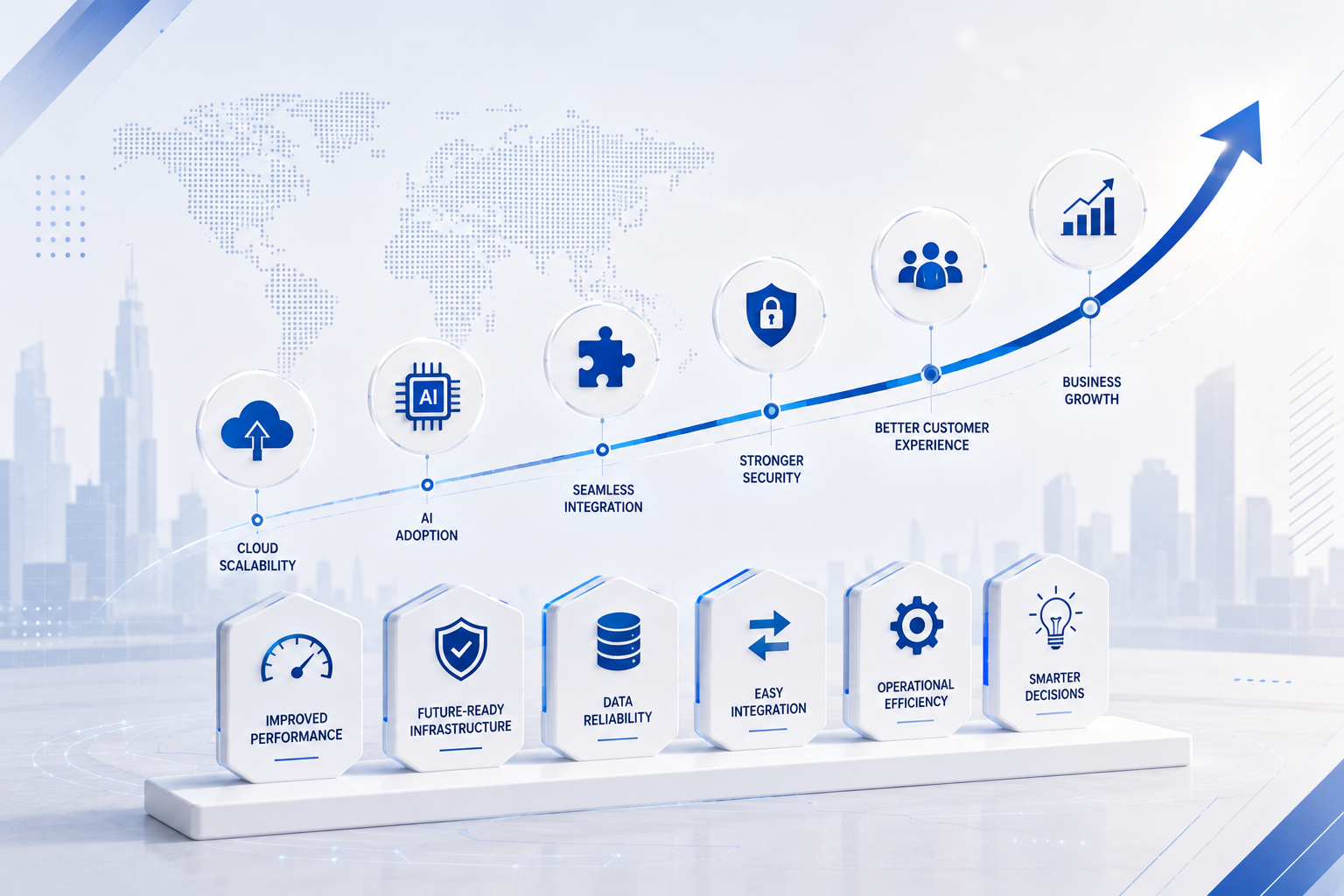
Discover what successful AI adoption requires in 2026. From identifying practical use cases to improving data, governance, and employee readiness, learn how businesses can prepare for AI-enabled operations.
Artificial Intelligence is becoming an increasingly important part of modern business strategy. Organizations are moving beyond experimentation and beginning to integrate AI into customer service, analytics, operations, sales, and internal workflows.
Successful AI adoption, however, requires more than simply implementing a new tool. Businesses need the right data, processes, technology, and governance.
Identify Practical AI Use Cases
Organizations should begin by identifying areas where AI can solve real business problems. Common AI use cases include:
- Customer support automation
- Document processing
- Predictive analytics
- Lead qualification
- Personalized recommendations
- Internal knowledge assistants
Starting with clearly defined problems makes it easier to measure business value.
Improve Data Quality
AI systems depend heavily on reliable information. Businesses should focus on:
- Cleaning existing data
- Removing duplicates
- Standardizing formats
- Improving data accessibility
- Establishing data ownership
High-quality data helps AI systems generate more useful and reliable results.
Integrate AI With Existing Workflows
AI delivers greater value when it becomes part of everyday operations. Integration may involve:
- CRM platforms
- ERP systems
- Customer service tools
- Internal databases
- Business intelligence platforms
The goal should be to improve workflows rather than introduce unnecessary complexity.
Establish Responsible AI Governance
Organizations should define how AI is used, monitored, and reviewed. Important considerations include:
- Data privacy
- Human oversight
- Access controls
- Accuracy monitoring
- Transparency
Responsible governance helps organizations manage risk while encouraging innovation.
Prepare Employees for AI-Enabled Work
AI adoption also changes how employees complete everyday tasks. Organizations can support their teams through:
- Training programs
- Clear usage guidelines
- Process documentation
- Role-specific AI education
Employees who understand how to use AI effectively are more likely to gain value from it.
Measure AI Performance and Business Value
AI initiatives should be evaluated against clear operational and business outcomes rather than adoption alone.
- Track accuracy and response quality
- Measure time and cost savings
- Review user adoption and satisfaction
Consistent measurement helps businesses improve AI systems and invest in the use cases that create the most value.
Final Thoughts
AI adoption in 2026 is not simply about adopting the latest technology. It requires thoughtful planning, strong data practices, and practical integration into business operations.
Nirami Solutions helps businesses design and implement AI solutions that support productivity, decision-making, automation, and long-term growth.
Recent Articles



Bhargav V.
Author
Magento 2 Security Patches: Complete Guide to Protecting Your Magento Store
Learn what Magento 2 security patches are, why they matter, and how to safely identify, test, and apply them, covering vulnerabilities, Composer patches, Cloud deployments, and post-patch verification.