
Ravi D.
Author
How to Choose Between Web, Mobile, and Cloud Applications in 2026
Understand how to choose between web, mobile, and cloud applications in 2026 based on user needs, required features, accessibility, scalability, and long-term business goals.
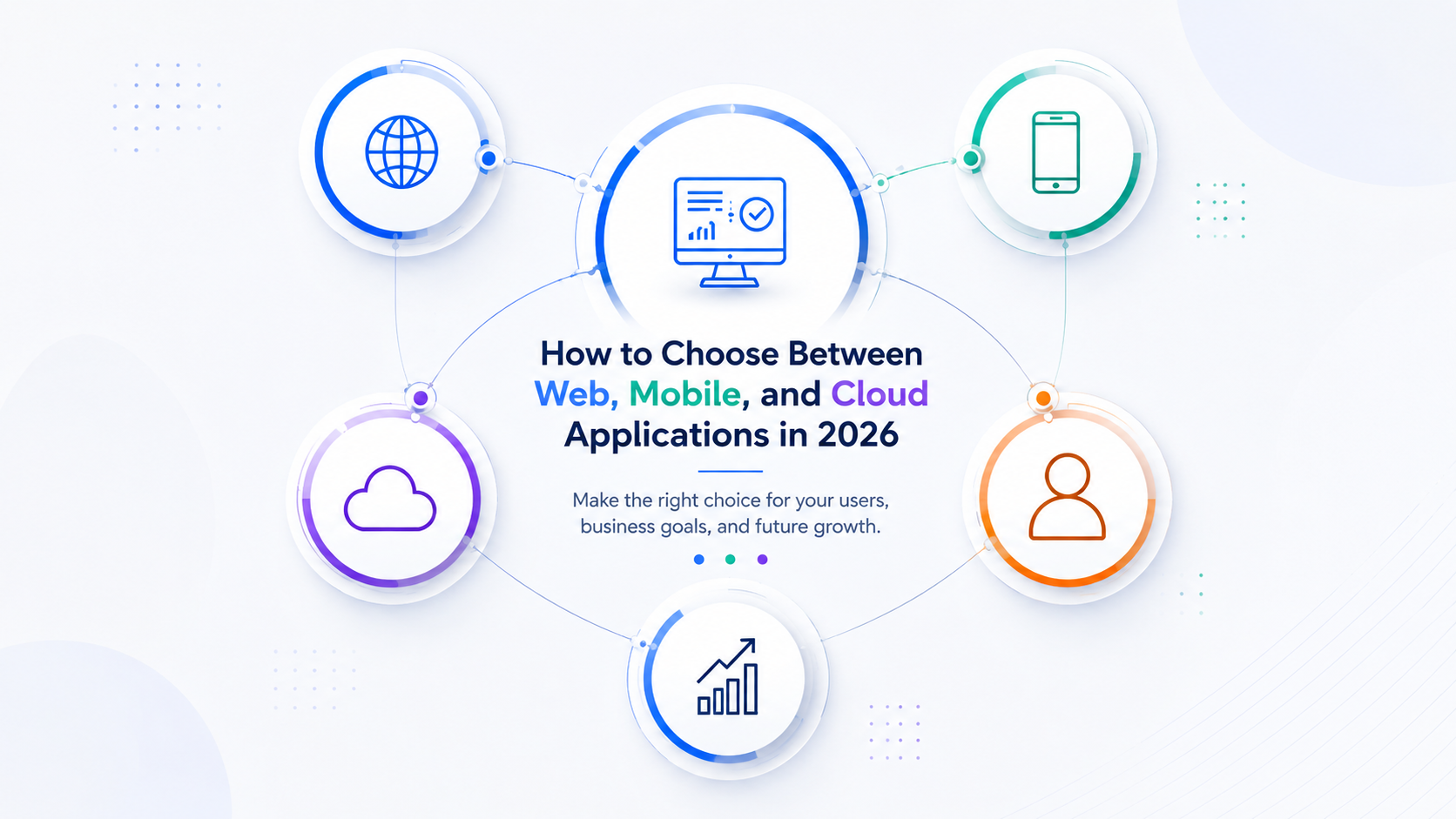
Discover how to choose the right application strategy for your business. Compare web, mobile, and cloud approaches based on user behavior, functionality, accessibility, and future scalability.
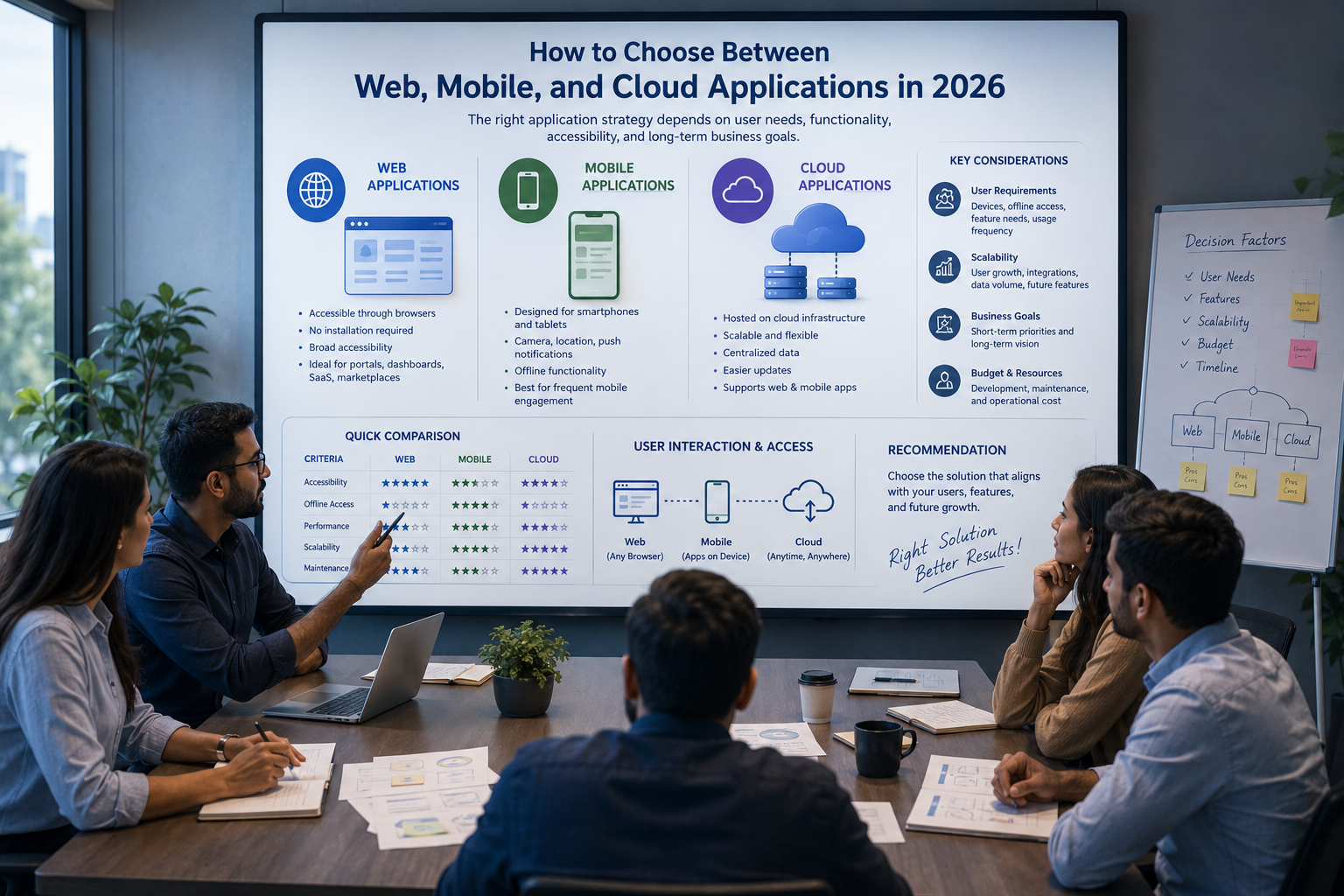
Choosing the right type of application is an important technology decision for modern businesses. Web applications, mobile applications, and cloud-based platforms each offer different advantages.
The right choice depends on user requirements, business objectives, functionality, and long-term growth plans.
When to Choose a Web Application
Web applications can be accessed through a browser without requiring users to install software. They are suitable for:
- Customer portals
- Internal dashboards
- Business management systems
- Online marketplaces
- SaaS platforms
Web applications are often a strong option when broad accessibility is important.
When to Choose a Mobile Application
Mobile applications are designed specifically for smartphones and tablets. They are useful when businesses require:
- Camera access
- Location functionality
- Push notifications
- Offline functionality
- Frequent mobile engagement
Mobile apps can provide a highly optimized experience for users who primarily interact through smartphones.
When to Choose a Cloud-Based Application
Cloud applications are hosted on cloud infrastructure and can support flexible, scalable operations. Benefits can include:
- Remote accessibility
- Scalability
- Centralized data
- Easier updates
- Integration capabilities
Cloud environments can support both web and mobile applications.
Consider User Requirements
Businesses should understand how users will interact with the application. Important questions include:
- Which devices will users use?
- Do they need offline access?
- How frequently will they use the application?
- Which features are most important?
- Where will users access the system?
User behavior should strongly influence application strategy.
Consider Long-Term Scalability
Technology decisions should support future business requirements. Organizations should consider:
- Expected user growth
- Additional features
- Integration requirements
- Data volume
- Geographic expansion
Choosing scalable architecture can reduce future redevelopment.
Evaluate Total Cost and Maintenance Needs
The best application choice should consider not only initial development but also the long-term effort required to operate and improve the product.
- Compare development and maintenance costs
- Consider release and update requirements
- Plan for support across devices and platforms
Looking at total lifecycle cost helps businesses choose an application strategy they can sustain as requirements grow.
Final Thoughts
There is no universal answer when choosing between web, mobile, and cloud applications. The best solution depends on business requirements, users, and long-term strategy.
Nirami Solutions helps businesses evaluate their needs and design applications that deliver the right combination of usability, scalability, and performance.
Recent Articles




Bhargav V.
Author
Magento 2 Security Patches: Complete Guide to Protecting Your Magento Store
Learn what Magento 2 security patches are, why they matter, and how to safely identify, test, and apply them, covering vulnerabilities, Composer patches, Cloud deployments, and post-patch verification.